Tooling is one of the largest upfront costs in a thermoforming project, and the material used to build the mold sets both the cost and the viable volume. Choosing the right tooling stage protects your budget.
Prototype tooling: wood and polyurethane
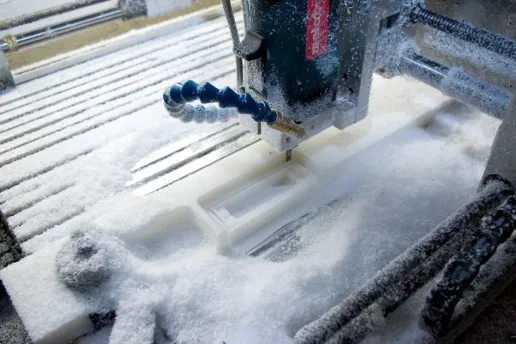
Wood and polyurethane molds are relatively inexpensive and fast to produce, which makes them ideal for prototyping and short runs. They let you prove the design, check fit and function, and iterate before committing to production tooling.
Production tooling: aluminum
Aluminum molds hold tighter tolerances, last longer, and sustain high volume runs with consistent detail. The higher upfront cost is justified once volumes are confirmed and the part design is stable.
How to sequence the two
- Start with wood or polyurethane tooling to validate the design and run prototype quantities.
- Confirm dimensions, material, and volume before investing in aluminum.
- Move to aluminum production tooling when the design is locked and volumes justify it.
Hill Plastics builds both prototype and production tooling in house, so the same team that forms your prototype parts carries the tooling into volume production. That continuity protects the dimensional consistency of the part.
Ready to start?
Talk through your part with our engineering team
Share your drawings and we will recommend the process, material, and tooling approach that fits your project.